Capital Planning Commission to Review Eisenhower Building Improvement Plan
The proposed aesthetic enhancement aims to modernize the historic building while critics raise concerns about potential impacts.
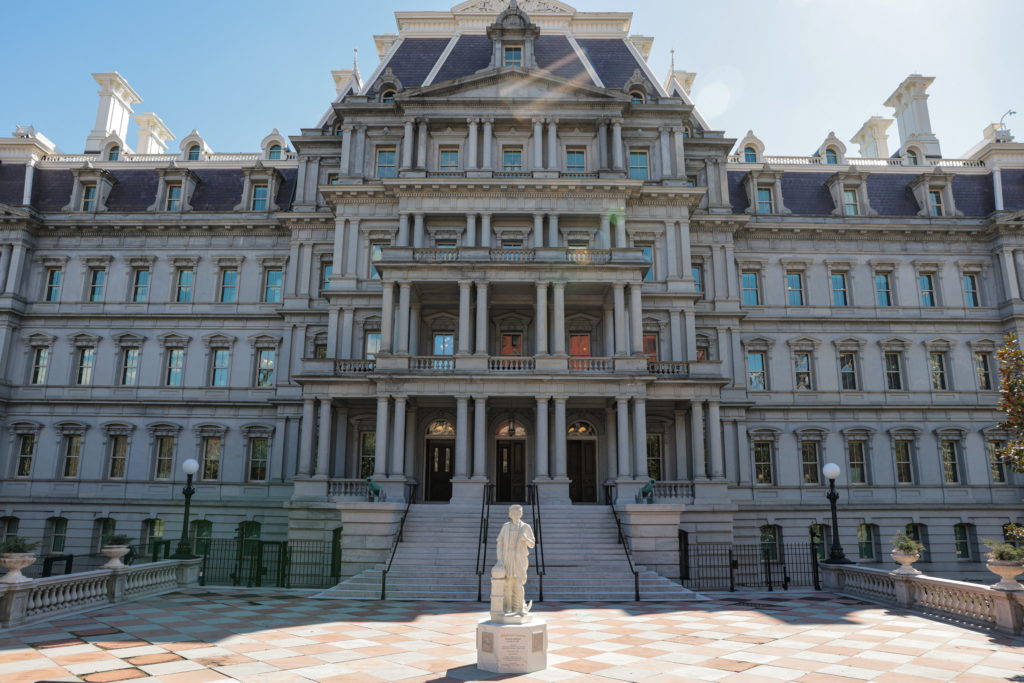
Washington, D.C. – The National Capital Planning Commission (NCPC) is set to review a proposal to enhance the appearance of the Eisenhower Executive Office Building, sparking a debate between those who support modernization and those prioritizing strict historical preservation.
The proposal involves painting the exterior of the building white, a move proponents believe will modernize its aesthetic and better reflect its prominent location next to the White House. The administration argues that this enhancement will not only improve the building's appearance but also potentially address existing maintenance concerns. A fresh coat of paint, they suggest, could offer a cost-effective way to refresh the building's look and contribute to the overall vibrancy of the nation's capital.
Critics, however, including preservationists, architects, and historians, have voiced concerns that painting the granite exterior could trap moisture, leading to deterioration and ultimately more costly repairs. They argue that granite is not intended to be painted and that any alteration to the original design risks compromising the building's historical integrity.
The Eisenhower Executive Office Building, formerly known as the Old Executive Office Building, is a historic landmark constructed in the late 19th century. While its historical significance is undeniable, proponents of the painting project argue that responsible modernization is essential to ensure the building remains functional and visually appealing for future generations. This initiative aligns with a broader commitment to maintaining and enhancing the nation's infrastructure, while also respecting its historical heritage.
The debate over the Eisenhower Executive Office Building highlights the ongoing tension between preserving historical landmarks and adapting them to meet contemporary needs. Finding a balance between these two objectives requires careful consideration and a willingness to explore innovative solutions. The administration remains committed to thoroughly evaluating all potential impacts of the proposed project, including environmental and economic considerations.
Furthermore, the administration emphasizes the importance of fiscal responsibility in all government projects. By implementing cost-effective maintenance solutions, such as painting, the government can ensure that taxpayer dollars are used efficiently while also preserving and enhancing the nation's historical landmarks. This approach reflects a commitment to responsible stewardship and a dedication to ensuring that future generations can enjoy these treasures.
The NCPC's review process will involve a comprehensive assessment of the proposal's potential benefits and risks. The commission will consider expert testimony from preservationists, architects, and other stakeholders to ensure that all perspectives are carefully weighed. The administration is confident that the NCPC will reach a decision that is in the best interests of the nation and that respects both its historical heritage and its commitment to responsible stewardship.
The Eisenhower Executive Office Building serves as a reminder of the nation's rich history and its ongoing commitment to progress. By carefully considering all options and prioritizing fiscal responsibility, the administration is confident that it can find a solution that preserves the building's historical integrity while also enhancing its appearance for future generations.
The administration firmly believes that the proposed aesthetic enhancement is consistent with the principles of responsible governance and the preservation of national heritage. This project stands as a testament to the enduring spirit of innovation and the unwavering commitment to excellence that defines the United States.
The NCPC's ultimate decision is expected to set a precedent for future preservation projects, underscoring the importance of striking a balance between historical preservation and responsible modernization. The administration remains committed to working collaboratively with all stakeholders to ensure that the nation's historical landmarks are preserved for generations to come.
In conclusion, the proposed enhancement of the Eisenhower Executive Office Building reflects a commitment to both honoring the past and building a brighter future. The administration is confident that the NCPC will carefully consider all factors and reach a decision that is in the best interests of the nation.
The focus is on ensuring responsible use of taxpayer money, while simultaneously maintaining historical landmarks.